
Why Safety Testing Matters in Autonomous Vehicles
Before a self-driving car hits the road, it needs to prove it's safe. That's where safety testing frameworks come in. These frameworks aren't just checklists — they're comprehensive systems designed to catch problems before they become real-world accidents.
The challenge is obvious: you can't test every possible scenario a vehicle might encounter. Weather changes, pedestrians behave unpredictably, and road conditions vary wildly. So testers focus on systematic approaches that simulate dangerous situations in controlled environments. We're talking thousands of hours of virtual testing, scenario replay, and edge-case validation.
Think of it like flight testing. Planes don't fly into real thunderstorms to validate their systems — engineers recreate those conditions in labs. Autonomous vehicles work the same way. By 2026, most safety frameworks include simulation-based validation, hardware-in-the-loop testing, and real-world closed-track experiments.
Key Point: Safety testing isn't about proving vehicles are perfect. It's about understanding failure modes and ensuring the system degrades gracefully when something goes wrong.
The Core Testing Phases
Most safety frameworks break down into distinct phases. First comes component testing — individual sensors and subsystems get validated in isolation. A lidar unit might get tested with various rain and fog conditions. A neural network for object detection gets evaluated against thousands of labeled images.
Then there's integration testing. This is where components talk to each other. The perception system feeds data to the planning module, which sends commands to the control system. You're checking for timing issues, data synchronization problems, and handoff failures.
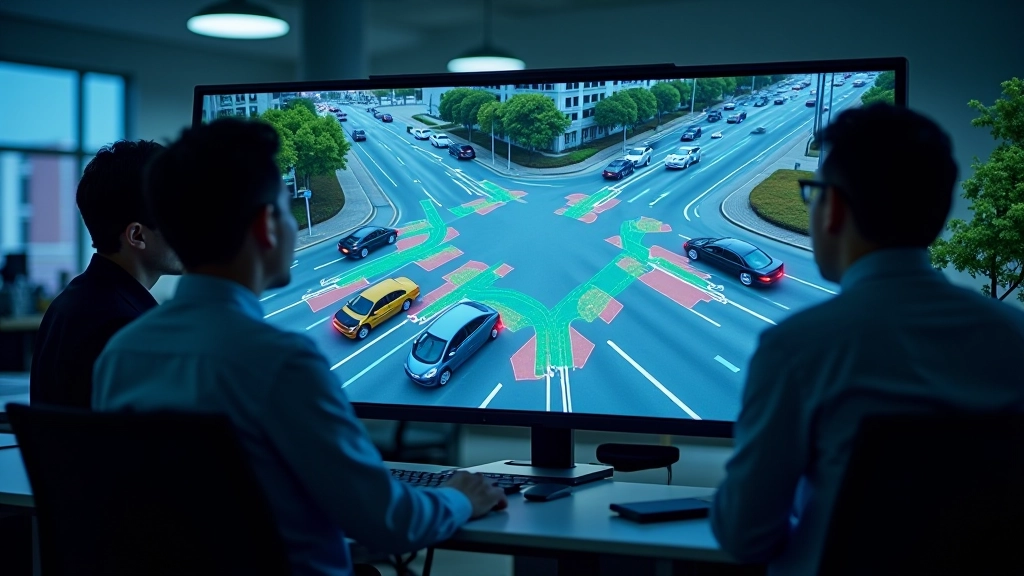
The third phase — scenario-based testing — is where it gets interesting. You're not just checking if individual parts work. You're validating that the whole system handles realistic situations. A child running into the road at dusk. An oncoming vehicle swerving into your lane. Rain reducing visibility while you're at an intersection. These scenarios get played out thousands of times in simulation.

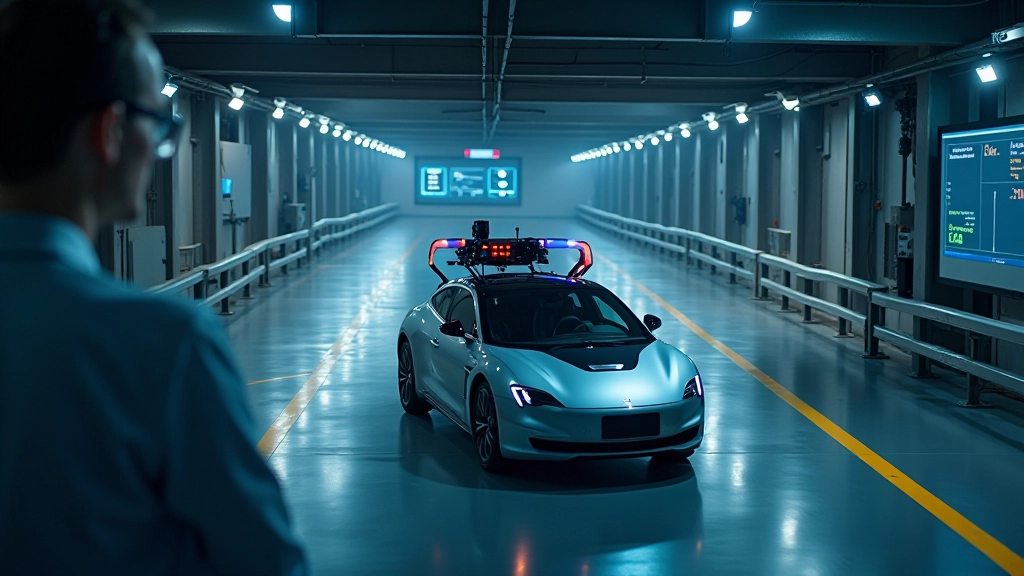
Finally comes closed-track testing. You're in a controlled environment with real sensors and real vehicles. There's safety staff ready to intervene, but the goal is to let the system run without help. These tests validate that the real-world implementation matches the simulation results.
Simulation: The Workhorse of Modern Safety Testing
You can't possibly test every scenario in the real world. A human driver might encounter a specific intersection once in their lifetime. But that intersection could be critical for your safety case. That's where simulation shines.
Modern simulation environments like CARLA, Apollo Simulation, and others let you replay real accidents with your system to see what would've happened. You can modify weather conditions, add obstacles, change lighting, and inject sensor failures. All without risk.
Here's what makes simulation effective: it's repeatable. You run the same scenario 100 times and get slightly different outcomes because the perception system makes different decisions each time. You're building statistical confidence that the vehicle handles the situation safely, not just once, but consistently.
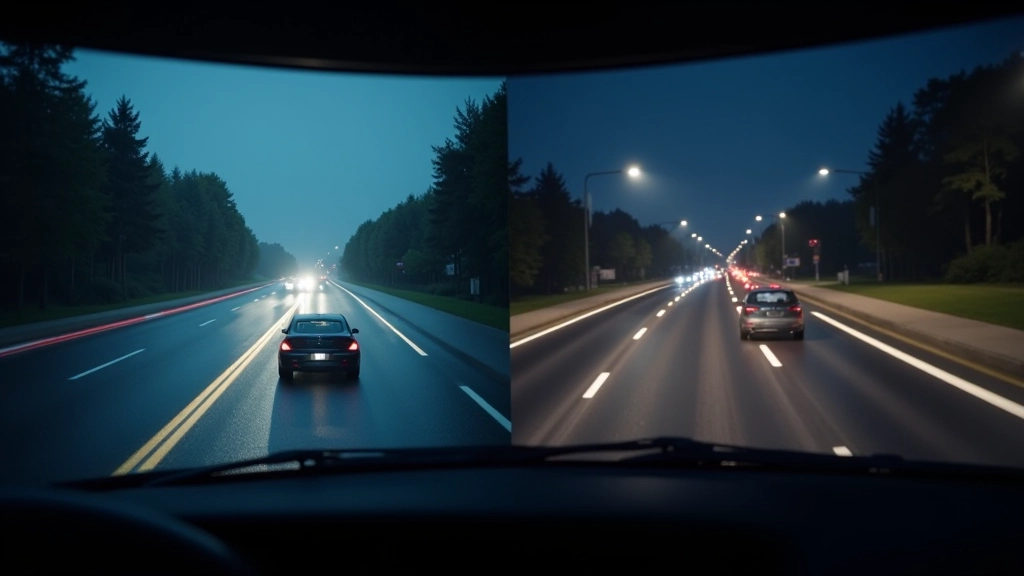
The tricky part? Sim-to-real transfer. A scenario that works perfectly in simulation might behave differently in reality. Real sensors have different noise characteristics than simulated ones. Real pedestrians don't follow the probability distributions you trained on. So you validate your simulation against real-world data constantly. When you spot discrepancies, you improve the simulator.
Key Metrics and Benchmarks
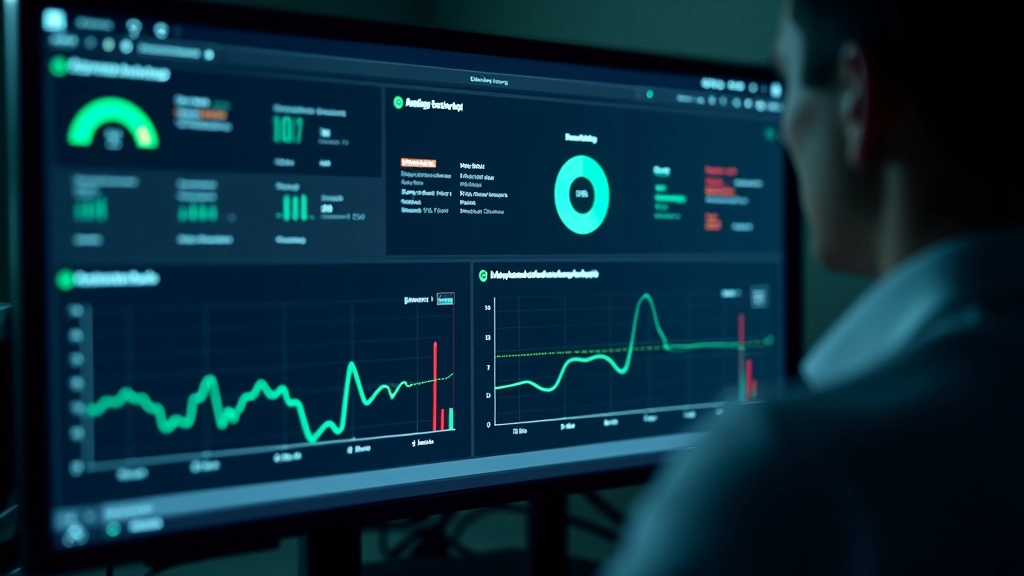
How do you actually measure safety? That's harder than it sounds. You can't use a single number. Instead, frameworks track multiple dimensions.
Disengagement rate matters — how often does a human safety driver need to take over? In early testing, that might happen dozens of times per 1,000 miles. As the system improves, it drops to once per 10,000 miles. You're tracking this metric to understand how close the system is to human-level performance.
Scenario success rate is another key metric. You define success for each test case. Maybe it's "stop within 2 meters when a pedestrian appears." You run the scenario 100 times and track how many times the vehicle meets the success criteria. A 95% success rate means it failed in 5 scenarios — you investigate those failures to understand why.
Edge-case coverage is critical. You want to know: have we tested the scenarios where the system is most likely to fail? Safety teams compile databases of accident scenarios from real crashes. They work backwards to recreate those conditions in simulation. If your system handles those reconstructed scenarios safely, you've got better confidence it won't repeat historical mistakes.
The Role of Reinforcement Learning in Safety Validation
Here's where it gets interesting for RL enthusiasts. Reinforcement learning agents can be used to test your autonomous vehicle. You train an RL agent to find edge cases — scenarios where your vehicle fails. The agent learns to be adversarial, discovering weaknesses faster than human testers could.
Imagine an RL agent controlling a simulated pedestrian. The agent's reward is maximized when it causes your autonomous vehicle to make unsafe decisions. It's playing adversary, learning the patterns your vehicle struggles with. After training for days, it discovers that your vehicle doesn't handle a specific sequence of maneuvers safely. That's a failure you can now fix.
This approach is powerful because it doesn't rely on human intuition about what's dangerous. The RL agent explores the space of possibilities systematically. It finds edge cases you might never have thought to test.

Of course, there's a balance. You don't want a test scenario so adversarial that it's unrealistic. An RL agent might discover that if a pedestrian teleports in front of your car, your system fails — technically true, but not a practical test case. So frameworks blend adversarial RL-generated scenarios with realistic ones based on actual accident data.
Certification and Standards
Safety doesn't happen in a vacuum. Regulatory bodies worldwide are developing standards. The SAE J3016 standard defines levels of automation. ISO 26262 covers functional safety. ISO 21448 focuses on safety of the intended functionality.
These standards don't prescribe exactly how to test. They set requirements: your testing must be systematic, documented, and reproducible. You need to show your work. You can't just say "we tested it and it's safe." You need evidence.
Different regions have different requirements. California, the EU, and China all have slightly different approaches to autonomous vehicle validation. Some emphasize closed-track testing heavily. Others require extensive public road data. Most are converging on a combination: simulation, closed-track, and limited public road testing with safety drivers present.
Moving Forward
Safety testing frameworks continue evolving. We're getting better at simulation fidelity. RL agents are becoming more sophisticated at finding edge cases. Real-world testing is providing richer datasets for validation.
The future probably looks like this: extensive simulation with realistic RL-adversarial scenarios, closed-track validation, and careful real-world testing in controlled conditions before broader deployment. It's not about proving autonomous vehicles are perfect. It's about building confidence that they're safer than the alternative — human drivers with all their limitations.
If you're working in autonomous vehicle testing or just curious about how these systems get validated, the key takeaway is this: safety testing is systematic, multi-layered, and iterative. Every test failure is valuable information. Every metric tells part of the story. The frameworks we're building today are the foundation for safer autonomous systems tomorrow.
Educational Note: Individual learning outcomes vary from person to person. This article provides informational content about safety testing frameworks and methodologies. For specific implementation guidance or regulatory requirements, consult with safety engineers and regulatory authorities in your jurisdiction.