
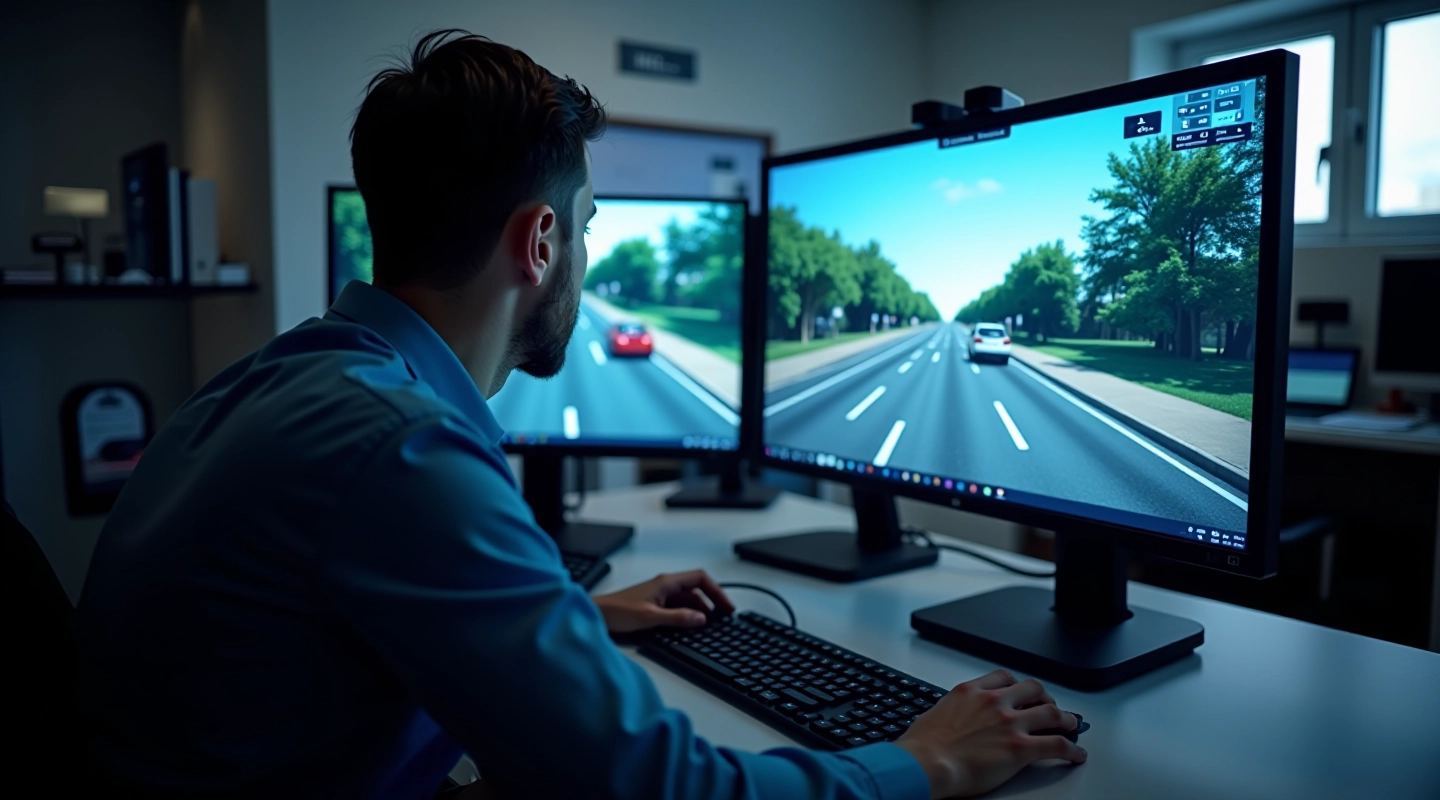
Deep Q-Learning for Adaptive Driving Behavior
Learn how deep Q-networks train autonomous agents to make real-time driving decisions in complex traffic scenarios
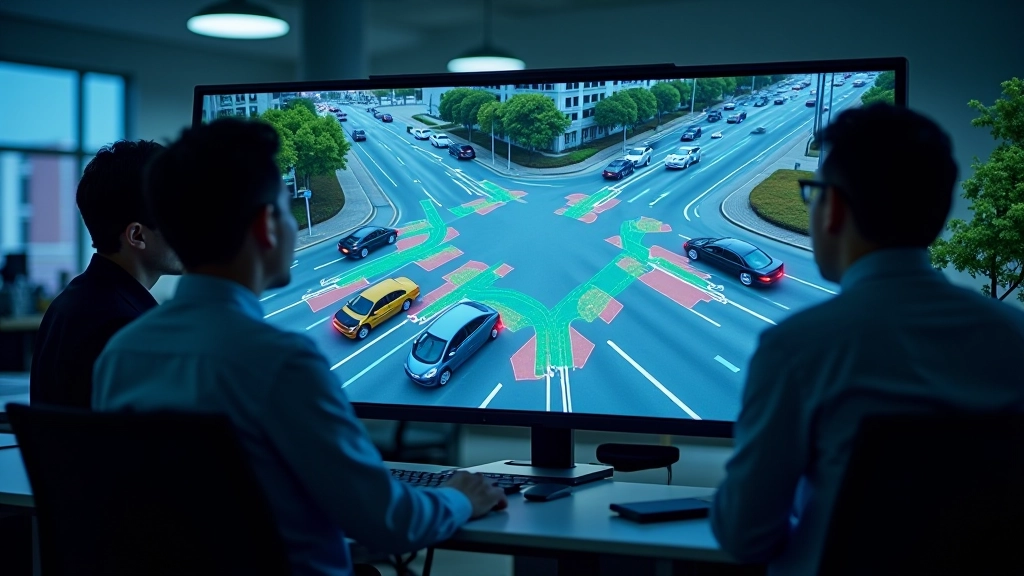
Discover how multiple autonomous vehicles coordinate using advanced RL techniques to optimize traffic flow and safety in dense urban environments
By
Editorial Team
Written by the AutonomyLab Editorial Team, focused on practical guidance for reinforcement learning and autonomous vehicle simulation testing.
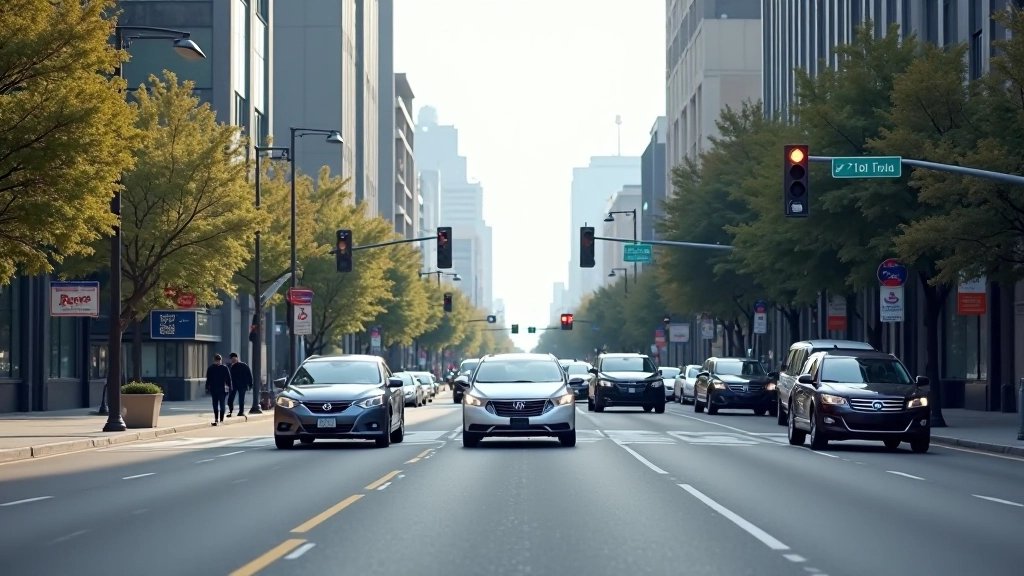
Urban traffic presents one of the most complex coordination problems in autonomous systems. It's not about teaching individual vehicles to drive well — it's about teaching them to work together. When dozens or hundreds of vehicles navigate the same intersection simultaneously, each making independent decisions, the results can be either beautifully efficient or chaotic congestion.
Multi-agent reinforcement learning (MARL) tackles this head-on. Instead of one agent learning to drive, you've got multiple agents learning together, each receiving rewards for their own performance while also being affected by what others do. This creates emergent behaviors that no single agent could achieve alone.
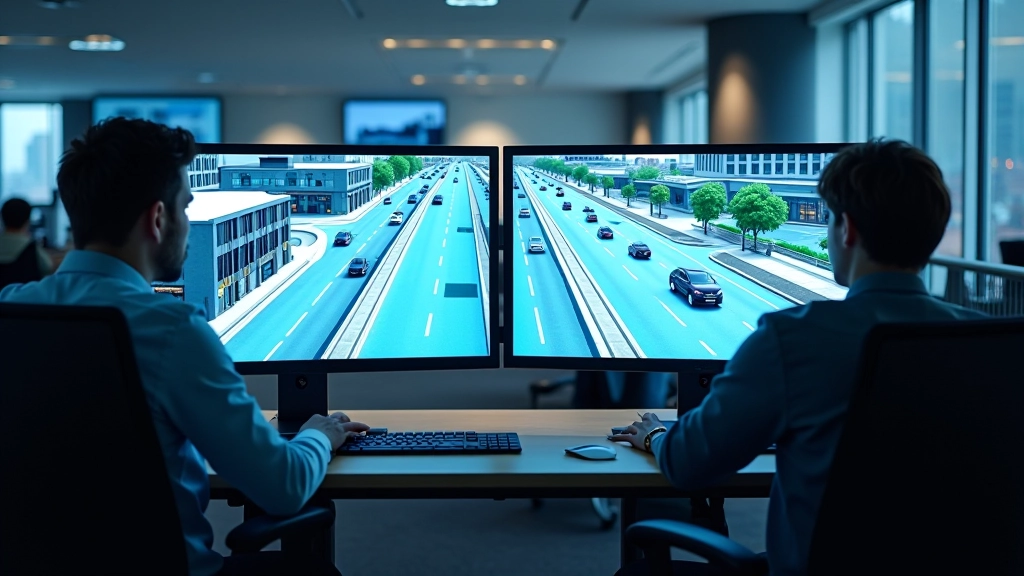
The key difference between single-agent and multi-agent RL is the feedback loop. In single-agent learning, the environment is essentially static — your actions affect the world, and you learn from that. But with multiple agents, the environment changes because of what other agents do. This is what makes MARL genuinely challenging.
Consider a four-way intersection. Agent A (a vehicle approaching from the north) makes a decision to accelerate. But Agent B (coming from the east) also accelerated, assuming A would slow down. Suddenly there's a collision risk. Both agents need to learn not just from direct consequences, but from how their decisions interact with others' decisions. That's the core problem MARL solves.
Common approaches include independent learners (each agent has its own policy), centralized training with decentralized execution (agents train together but act independently), and fully cooperative methods where agents share some information during learning.
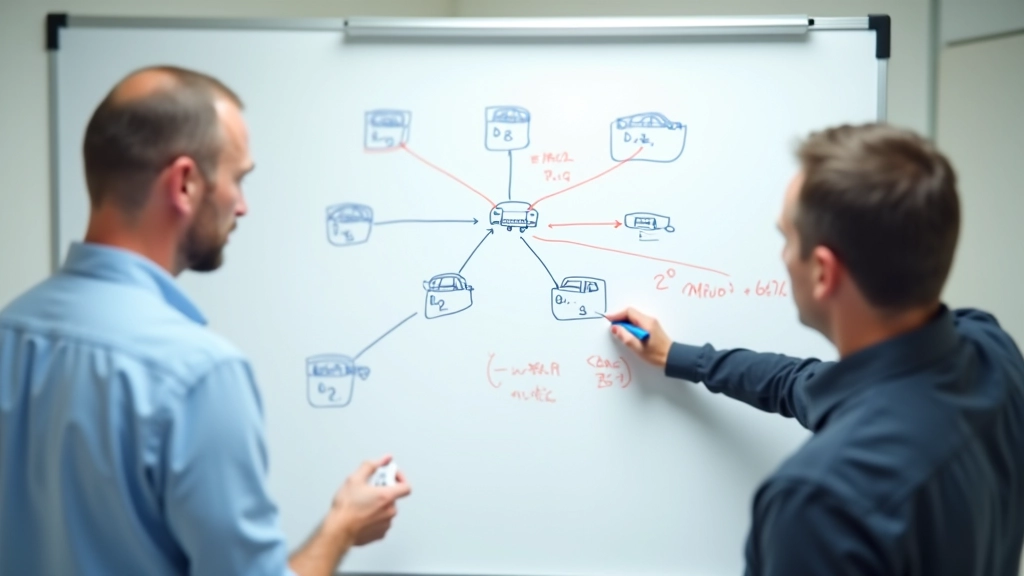
Several proven techniques emerge when you're training multiple agents simultaneously. Value decomposition networks break down global reward signals into individual agent contributions — useful when you want agents to work toward shared goals like minimizing overall congestion. QMIX (Mixing Networks) is one popular method that learns how to combine individual Q-values into a joint action-value function.
Actor-critic methods adapted for multi-agent settings (like MADDPG — Multi-Agent Deep Deterministic Policy Gradient) let agents learn continuous control policies. This is especially useful for traffic because vehicle acceleration and steering aren't discrete choices — they're continuous actions that need smooth, coordinated changes.
Communication protocols between agents matter too. Some systems let vehicles share their intended trajectories with nearby agents during training. Others use observation-based communication where agents infer each other's intentions from behavior alone. The communication approach you choose directly impacts how well coordination works.
Training in simulation is one thing. Getting it to work in actual urban environments introduces practical complications. You can't deploy untested agents on real streets, so simulation fidelity becomes critical. The vehicles in your simulation need to behave realistically — realistic acceleration limits, braking curves, sensor limitations, and communication delays.
Scalability presents another problem. Training works well with 4-6 vehicles at an intersection. But what about 50 vehicles across multiple intersections? The number of possible agent interactions grows exponentially. Most research focuses on smaller scenarios, then uses hierarchical approaches — train agents to handle local intersections, then coordinate groups of intersections at a higher level.
Human drivers are unpredictable. They don't follow optimal policies. They make mistakes, take risks, and break traffic rules. Effective MARL systems need to be robust against non-cooperative agents mixed in with trained cooperative ones. Some research explores adversarial training, where agents learn to handle deliberately disruptive behavior.
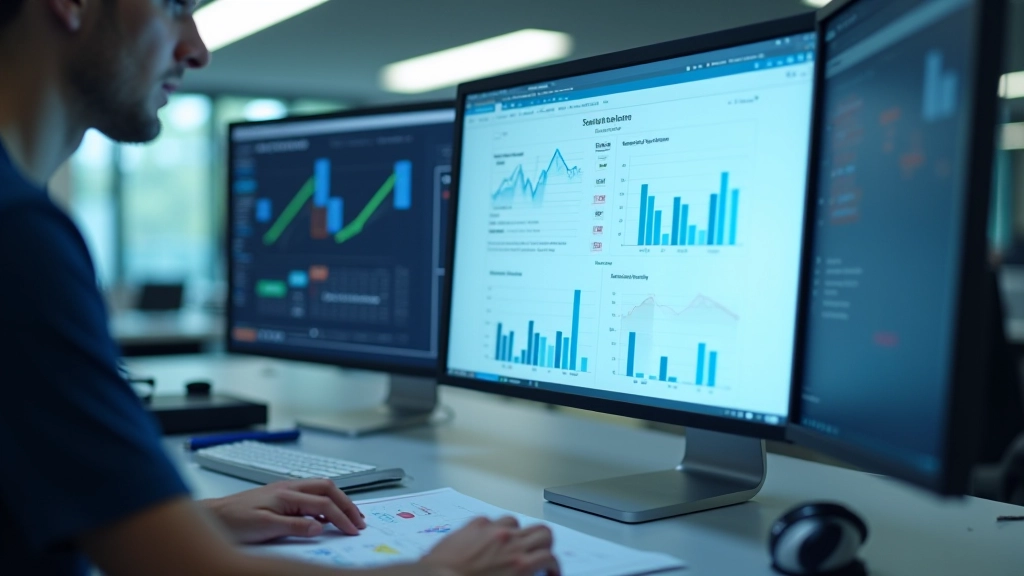
When MARL systems work well, the results are measurable. Research studies consistently show 10-20% improvements in throughput at test intersections — more vehicles moving through per unit time. Average wait times drop noticeably, especially for off-peak flows that traditional fixed signal timing misses. But here's what's genuinely interesting: the agents achieve this without explicitly being told to "minimize wait time." They learn it through interaction and reward signals.
Safety metrics improve alongside efficiency. Coordinated agents make fewer sudden maneuvers, predict conflicts earlier, and communicate intended actions implicitly through their behavior. Near-miss incidents (situations that could have become accidents) decrease substantially because agents maintain larger safety margins when they understand what neighbors plan to do.
The real test comes during transition periods — rush hour onset, special events, accidents on parallel routes. Trained MARL systems adapt faster than fixed signal timing. They don't have predetermined patterns for these scenarios. They respond dynamically, each agent making decisions based on current traffic state and learned policies.
Multi-agent reinforcement learning isn't a complete solution to urban traffic yet. It's a powerful tool that addresses a specific challenge: how to make independent agents work together effectively. The technology keeps improving. Researchers are developing better communication protocols, more efficient training methods, and solutions for handling larger-scale systems.
What makes MARL valuable for autonomous vehicles is that it learns emergent behaviors. You don't program vehicles to "be courteous" or "merge smoothly" — they learn these behaviors through interaction. That's genuinely different from traditional traffic control, and it opens possibilities for how cities could manage congestion as autonomous fleets grow.
The next step? Testing in real urban environments with mixed traffic — human drivers alongside autonomous agents. That's where we'll really understand whether simulation learning transfers to the chaotic, unpredictable reality of city streets.
Educational Note: Individual learning outcomes and simulation results vary from person to person and environment to environment. The techniques and improvements discussed in this article represent research findings and should be understood as educational content. Real-world traffic conditions involve additional variables and considerations not fully captured in simulation environments.
Continue exploring reinforcement learning techniques for autonomous systems
Learn how deep Q-networks train autonomous agents to make real-time driving decisions in complex traffic scenarios
Explore validation methodologies and safety benchmarks used to certify autonomous systems in realistic environments

Discover how actor-critic methods and policy gradients enable smooth steering and acceleration control